
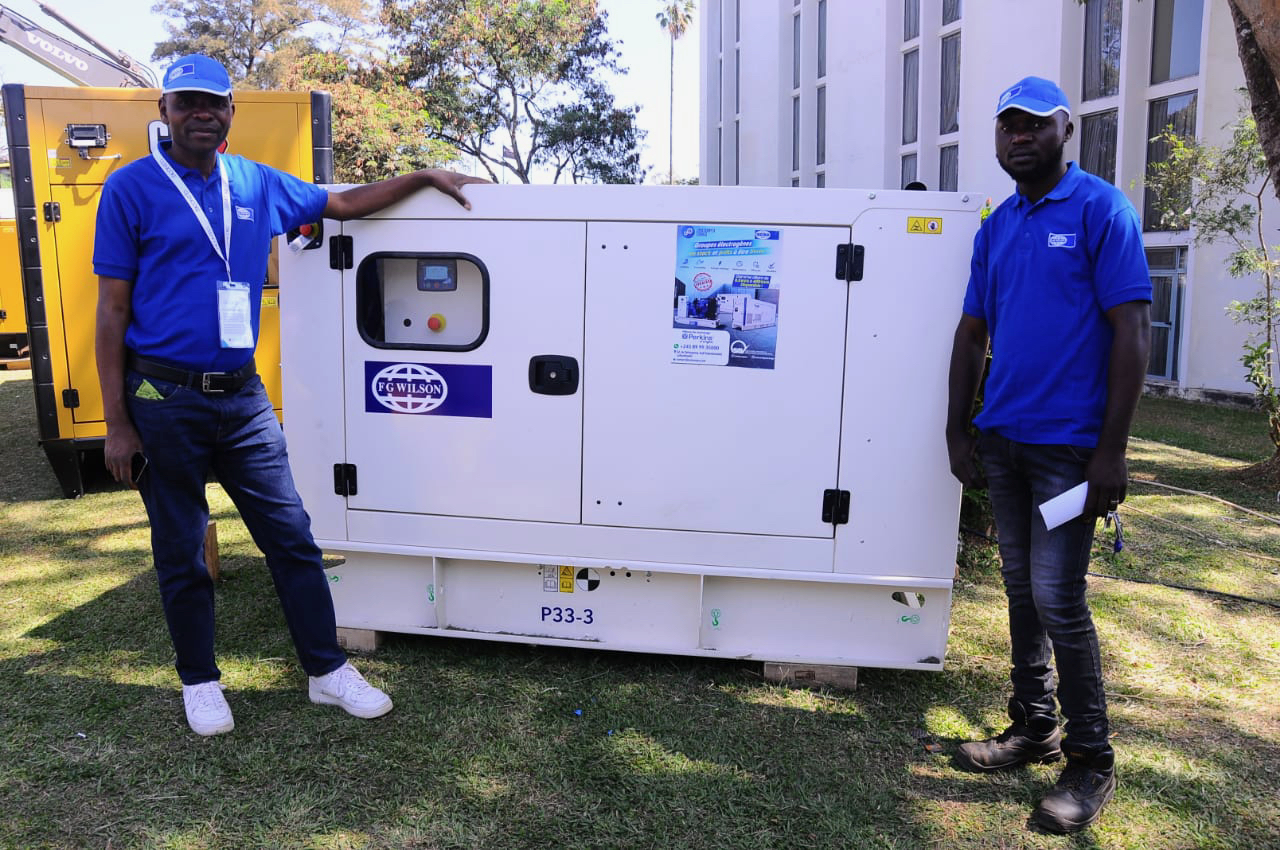
These extracts are from FG Wilson manual which is designed to help operators safely start, stop and handle FG Wilson P and PRO range generator sets.

INTRODUCTION
Thank you for choosing us to supply the electrical power you need. In line with our policy of continuous product development, we reserve the right to make changes to the information contained in this manual without prior notice.
This instruction manual has been designed to help you use and maintain your generator set correctly. The operator is advised to take the time to read the following. Some tasks may require the intervention of specially trained technicians, an operator should only attempt to carry out a task if it has been designed for that purpose.
This generator set is one of a range of industrial generator sets designed to be ready for operation as soon as they are delivered, after adding coolant, fuel and electrolytic fluid to the battery. The result of many years' experience in this technology, this is a reliable, high-performance, quality electricity generator.
Ensure that maintenance, adjustments and repairs are always carried out by personnel who are authorised and properly trained to carry out this work. Maintenance and repairs must be carried out regularly and original parts must be used, as these are the only parts capable of prolonging the service life of the generating set. The manufacturer declines all responsibility for any faults or warranty claims resulting from negligence on the part of the user (incorrect installation, use or maintenance), or from any modification whatsoever to the products in relation to the condition in which they were sold. Generating sets must only be handled by persons designated for this purpose, and must therefore be protected from any unauthorised use.
Some photographs or illustrations in this manual show details or fixings which may differ from your generating set. These images are for illustrative purposes only. If you have any queries about your generating set, please contact your local distributor for the latest information available.
Each generating set has a unique identification defined by a model number and a serial number shown on a manufacturer's plate generally fixed to the side of the alternator (Section 3.1). These references are required when ordering spare parts, or carrying out any warranty or maintenance work if necessary.
SAFETY INSTRUCTIONS
The generating set is designed to operate safely if used correctly. However, where safety is concerned, the responsibility lies with the personnel using the generating set. Before any work or use, the user must ensure that it is carried out in complete safety.
Warning:
- Before starting up the generating set, read the safety instructions and warnings carefully.
- Failure to follow the instructions, procedures and safety precautions in this manual may increase the risk of accident or injury to personnel.
- Never start up the generating set unless you are sure that you can do so safely. I Never start up the generating set if, to the best of the user's knowledge, all the safety conditions have not been met.
- If the safety conditions are not met, refer to the instructions in the event of danger and disconnect the negative terminal (-) from the battery so that the generating set cannot be started.
- Ensure that the generating set is protected from unauthorised use, use signs if appropriate. I Disconnect the negative (-) battery terminal before attempting any installation, repairs or cleaning on the generating set.
- Installation and operation of the generating set must comply strictly with local and national standards and regulations, as well as any other regulations in force.
Emergency stop push-button
The emergency stop button is in the OFF position for normal motor operation. Press the emergency stop button. The motor will not start until the button is released. Turn the button clockwise to reset.
Personal protective equipment

The maximum air pressure for cleaning must be limited to 205 kPa (30 psi) when the air nozzle is manually sealed at the end, and used with effective chip protection (if applicable) and personal protective equipment. Maximum water pressure for cleaning must be less than 275 kPa (40 psi). Always wear safety goggles when cleaning the cooling system.
Warning
- Do not charge a frozen battery, as this could cause an explosion.
- Make sure that the room in which the generating set is installed is properly ventilated.
- The room, its floor and the generator must be kept clean. Any spillage of fuel, oil, battery electrolyte or coolant must be cleaned up immediately.
- Never store flammable liquids near the engine.
- Store impregnated cloths in closed metal containers.
- Do not smoke or cause flames or sparks near fuel or batteries. Fuel vapours are explosive. Hydrogen generated by charging batteries is also explosive.
- Avoid refuelling while the engine is running.
- Do not operate the generating set if there is a leak in the fuel system.
- Do not use aerosol starting aids such as ether. Using this type of material can cause an explosion and injury.
Neutral earth connection (LNT)
Depending on the particular installation conditions of a product, your generating set may require a neutral to earth connection. You should consult your local distributor or a qualified electrician to confirm the particular earthing requirements of the generating set installation and to ensure that local wiring regulations are complied with.
The safe and efficient operation of electrical equipment can only be ensured if it is used and maintained correctly.
Generator set insulation
Before carrying out any maintenance or repair work on the generating set, proceed as follows:
- Stop the engine.
- Isolate the battery using the battery isolator. Display a "DO NOT OPERATE" sign on the motor starter circuit. Disconnect the motor starter circuit.
- Disconnect the generator from the distribution system.
- Lock the circuit-breaker. Display a "DO NOT OPERATE" sign on the circuit-breaker. Refer to the electrical diagram. Check that all the points on the power return flow have been locked.
- For the following circuits, open the miniature circuit breakers: power / detection / control
- Display a "DO NOT OPERATE" sign on the generator set's excitation controls.
- Remove the generator terminal cover
- Use an audio/visual proximity tester to check that the generating set is de-energised. This tester must be isolated for the correct voltage value. Follow the guidelines to check that the tester is working correctly.
- Check that the generating set is de-energised. Add earthing clamps to the conductors or terminals. These earthing clamps must remain connected to the conductors and terminals throughout the operation.
First aid in the event of electric shock
- Do not touch the victim's body with bare hands until the power source has been switched off.
- If possible, switch off the power supply.
- If not, disconnect the plug or move the cable away from the victim.
- If this is not possible, climb onto a dry insulating platform and move the victim away from the conductor, preferably using an insulating material such as dry wood.
- If the victim is still breathing, place them in the recovery position described below. I If the casualty is unconscious, proceed with resuscitation.
OPEN YOUR MOUTH :
1. Tilt the victim's head backwards and lift their chin upwards.
2. Remove any object from your child's mouth or throat (including dentures, tobacco or chewing gum).
BREATHING :
3. Check that the victim is breathing by looking, listening and feeling for breath.
TRAFFIC :
4. Check the pulse on your neck or wrist.
PULSATIONS WITHOUT BREATHING :
- Pinch the victim's nose firmly.
- Take a deep breath and press your lips against the victim's.
- Slowly breathe air into the victim's mouth, watching as the chest rises. Allow the victim's chest to return completely to the exhalation position. Proceed in this way at a rate of 10 breaths per minute.
- If you have to leave the victim momentarily to go and get help, first give 10 breaths, then return quickly and continue in the same way.
- Check the pulse every 10 breaths.
- When the victim starts breathing again, place them in the recovery position described later in this section.


NO PULSE AND NO BREATHING:
- Seek medical assistance.
- Blow in air twice and start the massage as follows:
- Place the base of the palm of your hand, about two fingers wide, at the junction of the sternum and the ribcage.
- Place the other hand on top of the first and interlace the fingers of both hands.
- Keeping your arms firm, press down on your chest about 4 to 5 cm 30 times in succession, at a rate of about 100 presses per minute. The time between pressing and releasing the chest should be the same.
- Repeat the cycle (2 breaths, 30 presses) until medical assistance takes over.
- If the victim's condition improves, check the pulse and continue the breaths. Check the pulse every 10 breaths.
- When the victim starts breathing again, place them in the recovery position described below.

RECOVERY POSITION :

- Turn the victim on their side.
- Keep his head tilted with his jaw forward to allow him to breathe.
- Make sure the victim cannot tip forwards or backwards.
- Check your breathing and pulse regularly. If they stop, proceed as above.

Pre-start checks (applicable to all control systems)
Warning
- The checks detailed below are the only tasks to be carried out by an operator.
- The following checks should be carried out before starting the generating set:
A simple visual inspection should only take a few minutes and can prevent accidents and more costly repairs..
To ensure the generator lasts as long as possible, inspect it visually before starting it up.
Check the following points, among others:
- Loose fasteners, worn belts, loose connections. Repair as required.
- The fan and exhaust guards must be in place and properly secured. Repair damaged/loose guards or replace missing ones.
- Wipe all filler caps clean before carrying out any maintenance work on the engine or topping up with ingredients, to reduce the risk of contamination of the circuits.
- Whatever the type of leak (coolant, lubricating oil or fuel), clean up any trace of liquid.
If a leak is detected, find the source and rectify it. If a leak is suspected, check the levels frequently until the leak is found and repaired. - Any accumulation of grease and/or oil on a motor represents a fire hazard. Clean with steam or a high-pressure cleaner. Keep the high-pressure cleaner away from electronic/electrical components and provide suitable protection wherever possible.
- Make sure the coolant pipes are correctly fitted and tightened. Check for leaks. Check all pipes for cracks and chafing.
- Liquid levels
- Check the engine oil levels and coolant levels - Refill if necessary (see engine manual for locations).
- Make sure that the fluids used comply with the recommendations given in the engine manual.
Warnings :
- Do not remove the radiator cap or any other part of the cooling system while the engine is running and the coolant is under pressure, as this could result in a dangerous gush of hot coolant, which could cause injury.
- Do not add large quantities of cold coolant when the system is hot, as this could cause serious damage to the engine.
- Diesel engines normally consume lubricating oil at a rate of 0.25 % to 1 % of fuel consumption.
- When filling the fuel tank, do not smoke or use open flames in the vicinity. Always fill the tank when the engine is cold.
- When filling the fuel tank, do not smoke or use naked flames in the vicinity.
- Check the fuel level - top up as necessary. Drain water from water separator (if fitted)
- Before tensioning the fan belts, disconnect the negative (-) battery cable to ensure that the engine cannot be started accidentally.
- Check the condition and tension of the fan and engine alternator belts - retighten if necessary.
- Check the mechanical condition and tightness of all hoses - tighten or replace as necessary.
- Check that the battery terminals are not corroded - clean as necessary.
- When working with batteries, do not smoke or use open flames in the vicinity. Hydrogen gas from batteries is explosive.
- Do not short-circuit the positive and negative terminals together.
- Check the battery electrolyte level - top up with distilled water if necessary.
- Check the control box and generator set for dust and dirt build-up - clean if necessary. This build-up may present an electrical hazard or cause cooling problems.
- Check the air filter clogging indicator - replace the filter if necessary.
- Clear the area around the generator set of any hazardous items that could prevent the set from operating correctly or cause injury to users. Check that the ventilation grilles are not obstructed.
- Visually check the whole generating set for signs of leaks in the fuel system, cooling system or lubrication joints.
- Drain the condensate traps in the exhaust system periodically, if necessary.
- If a liquid collection container is built into the chassis, it must be inspected. Any liquid (fuel, oil, coolant, rainwater or condensation) must be drained and disposed of in accordance with local regulations and mandates.
- Make sure the alternator output circuit breaker is in the "OFF" position (handle down).
FG100 control panel

When the engine hours OR time limit expires, the MAINTENANCE REQUEST LED (red) will flash and the maintenance request output function will be active. The maintenance request can also create a fault condition of any level following a parameter setting.
The maintenance request output function can be assigned to any digital output using the relay definition programming parameters.
To turn off the maintenance request LED and reset the maintenance period, press the Stop and Lamp Test buttons simultaneously for 5 seconds.

Using the appliance
Quick start guide
- MOTOR STOP: Press the STOP button
- STARTING THE ENGINE: Press the START button.
- CHARGE TEST: Press the ON button for 5 seconds.
. The generator starts up and takes the load.
- AUTOMATIC OPERATION: Press the AUTO button
.
You can change the mode at any time without any negative effect. Changing the operating mode of the genset when it is already running causes it to adopt the behaviour corresponding to the newly selected mode.
Use the emergency stop button ONLY in an emergency. Do not use the emergency stop pushbutton to perform a standard engine shutdown. After an emergency stop, DO NOT start the engine until the problem that caused the emergency stop has been resolved.
Read the entire FG Wilson manual here.
For servicing, contact only the representative of the product purchased to guarantee a competent service.

Unicompex Congo
Emergency power since 1997
By email : contact@unicompex.net or by telephone: +243 81 99 35 000
Address: 1458 Avenue Colonel Lukusa, Gombe, Kinshasa, Democratic Republic of Congo
 English
  French
  Spanish
  Chinese
  Hindi
Hindi
One response to “Manuel d’utilisation et de maintenance pour groupe électrogène FG Wilson”
[...] «Before using the generating set, please consult your local distributor to find out whether it is equipped with a neutral-earth connection (NEC). Knowing that if a site has more than one LNT, its safety can no longer be guaranteed, it is important to establish whether there is already one on site.» Point 2.9 of the FG Wilson user manual (PDF) [...]